Modeling & Simulation
Prior to hardware fabrication and field deployment, our engineering methodology relies heavily on high-fidelity digital twins. By leveraging advanced, physics-backed modeling and simulation, we systematically de-risk complex programs, optimize system architectures, and accurately predict end-to-end performance under diverse operational conditions.
WaveTrain: Integrated Physics-Based Simulation
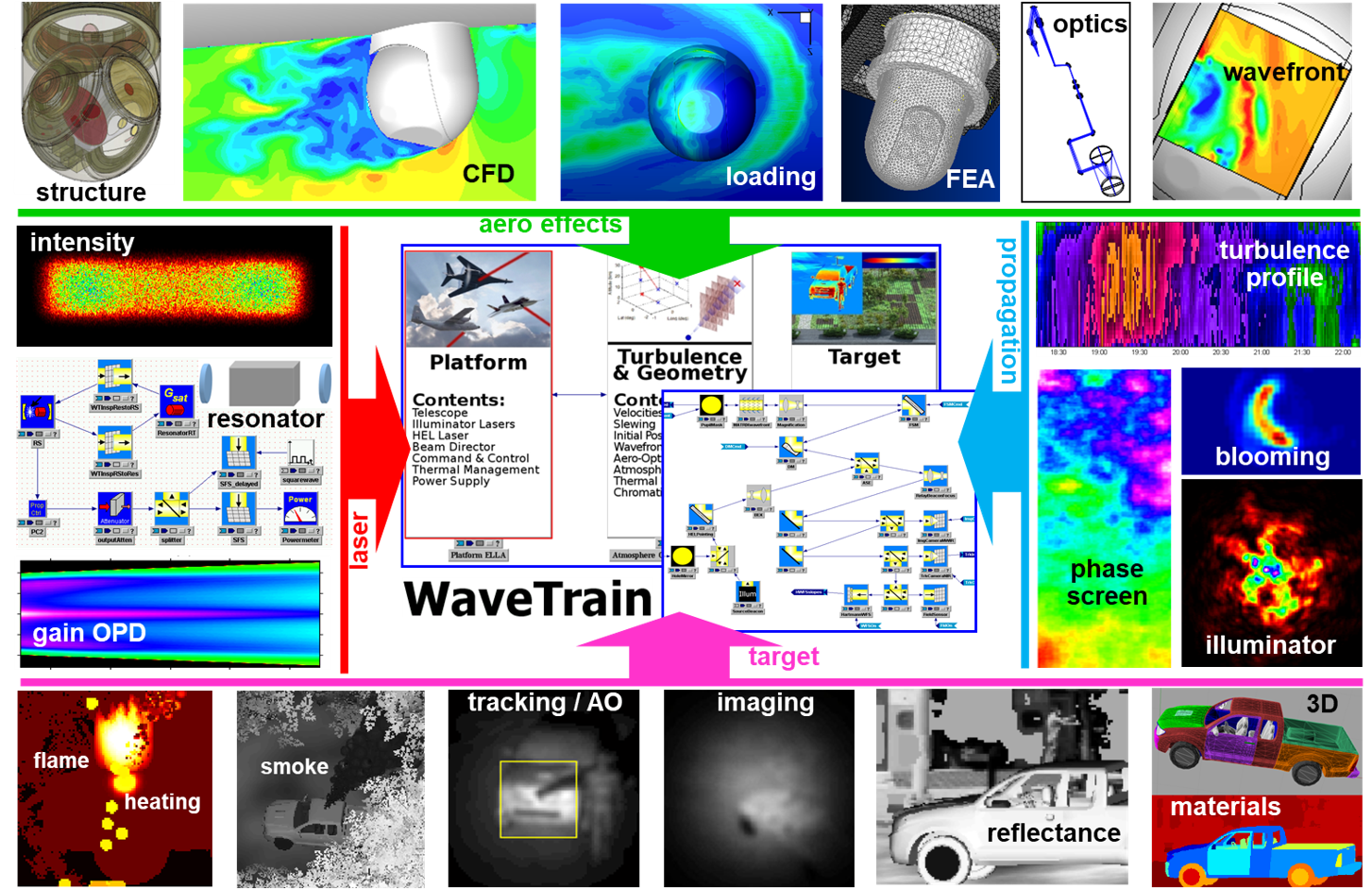
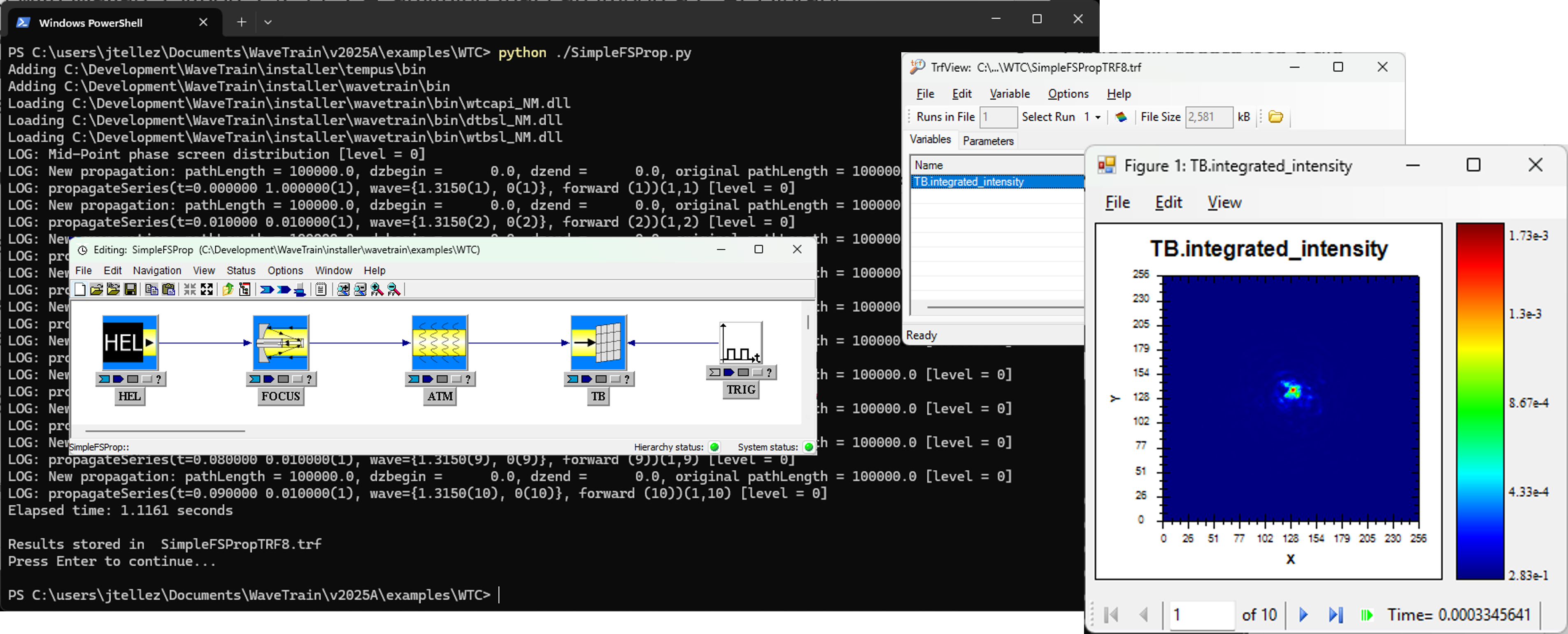
We utilize WaveTrain , an industry-standard, integrated physics-based simulation platform, to conduct comprehensive wave-optics analysis. This powerful capability allows our team to model complex optical trains from source to target, simulating detailed beam propagation, sensor performance, and adaptive optics control loops to validate system concepts early in the design lifecycle.
Atmospheric & Aero-Effects Modeling
The dynamic boundary layer between an optical aperture and its target introduces severe wavefront degradation. We employ sophisticated atmospheric and aero-effects modeling to characterize the impacts of localized thermal bloom, boundary layer turbulence, and high-speed aerodynamic shockwaves. These models enable us to quantify environmental disturbances and engineer highly targeted mitigation strategies.
Beam Control & Propagation Scaling Models
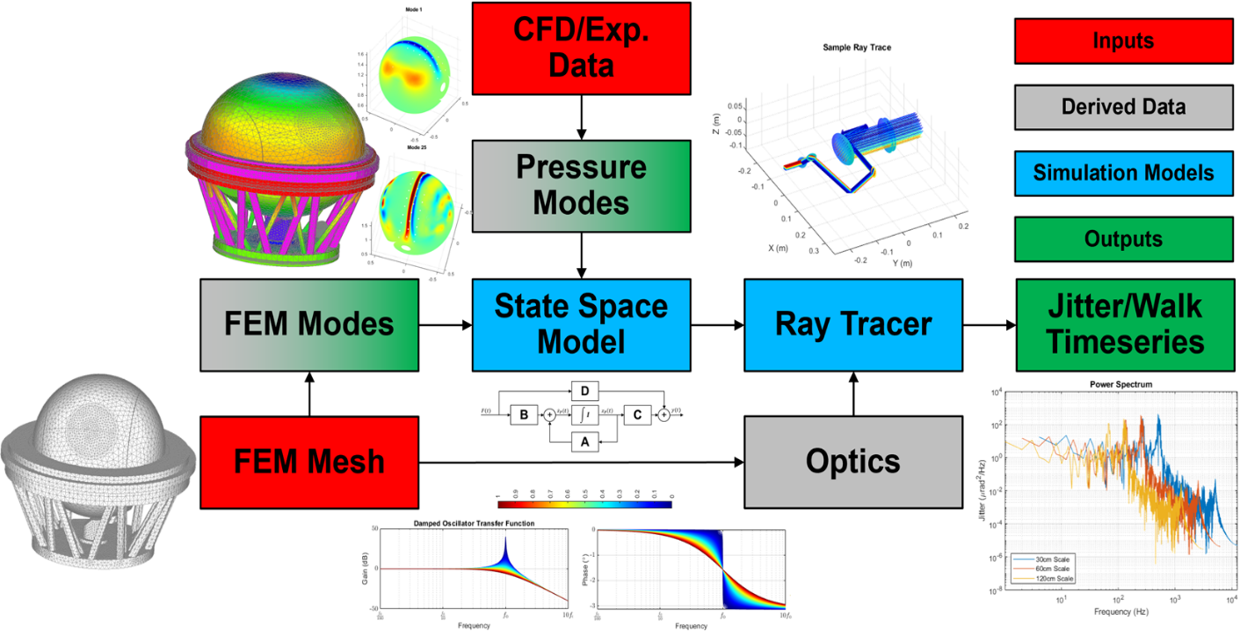
To evaluate performance across varied operational envelopes, we develop and implement rigorous beam control and propagation scaling models. These analytical frameworks allow our engineers to scale power levels, aperture sizes, and target distances virtually, ensuring that tracking, stabilization, and energy-on-target metrics meet mission-critical requirements before committing to physical prototyping. Models built with SHaRE are used throughout Government and Industry for integration with higher-level simulations.
Systems Engineering Models
Maximizing operational readiness requires a holistic view of system interdependencies. Our systems engineering models capture the multi-domain interactions between optomechanical assemblies, power budgets, thermal management systems, and command-and-control software. This macro-level simulation ensures seamless sub-system integration, eliminates performance bottlenecks, and guarantees system-wide reliability.